Asthma affects people of all shapes, sizes, ages, and locations, but most are diagnosed before age 7. Asthma is a disease of inflammation and this typically has a trigger. Exercise, cold air, allergies (dust, pets, mold),and infections are all triggers for an asthma attack or contribute to poor control.
There are 4 stages or classifications of asthma. Mild intermittent, mild persistent, moderate persistent, and severe persistent. Each stage is gauged by how often you experience symptoms and/or need to use rescue medication. This test will help you evaluate how effective your medications are or if you need increased control.
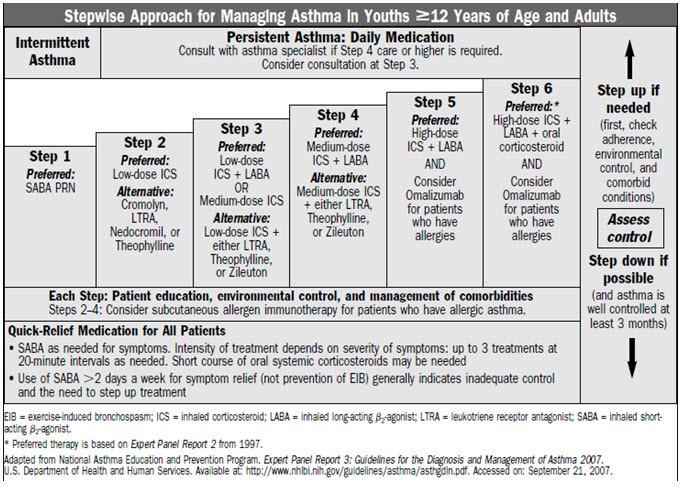 For example, a patient with mild intermittent asthma has a rescue inhaler they use less than twice a week. They don't wake up at night coughing (classic asthma symptom; dry night-time cough) very often and there is no interference with their normal activities. As long as these standards don't change, the patient is considered to be well controlled. If their frequency of rescue inhaler use increases, their nighttime waking due to coughing increases, or there is interference of normal activities, then they should be evaluated and possibly moved up a step and therefore need a daily asthma controller medication in addition to the as-needed rescue inhaler.
 A general rule of thumb is that if you have a diagnosis of severe persistent asthma, you should be seeing a Pulmonologist. Your normal PCP can manage your asthma, but best to consult a specialist if your disease progresses.
There are so many medications to help and treat asthma. The basic ones are a rescue inhaler (short acting Beta agonist; SABA), daily steroid (inhaled corticosteroid; ICS), and a daily inhaler (long acting Beta agonist; LABA). A rescue inhaler is albuterol, typically ProAir or Ventolin. Inhaled corticosteroids are great medications because they reduce inflammation. They include Flovent, Azmacort, Arnuity, and Qvar. The LABA medications include formoterol and salmetorol. The LABA medicines keep your lungs open (bronchodilation) therefore it is really important to take it every single day. If it's raining; you take it. Sunny? You take it. Hot? Cold? Cloudy? Holiday? Out of town? Take this medication every single day. Often the LABA and ICS's are prescribed together making it very easy to get both medications in one dose!

No comments:
Post a Comment